| Detail | Information |
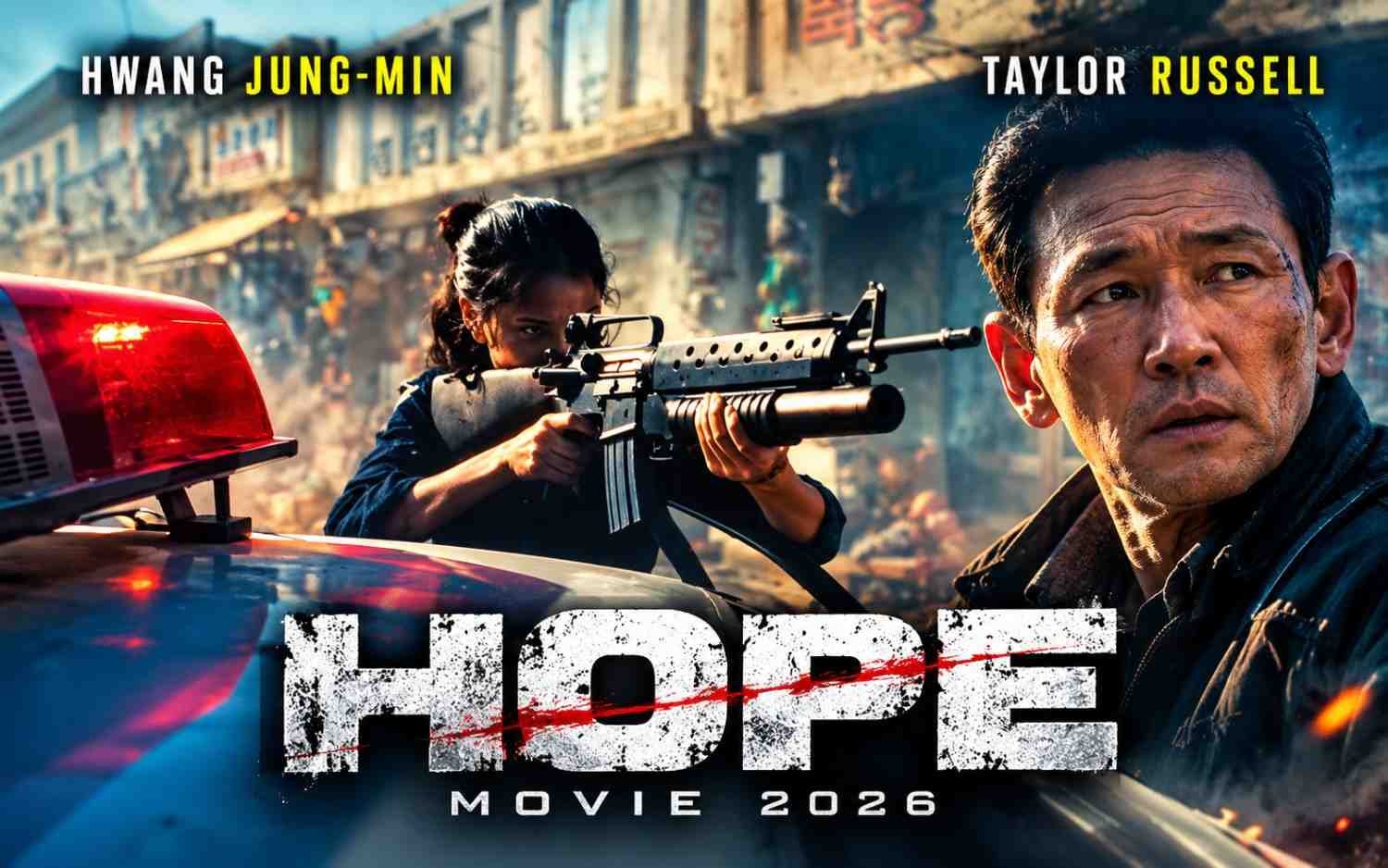
| Movie Name | Hope |
| Language & Genre | Telugu |
| Main Cast | Hwang Jung-min, Taylor Russell |
| Directed By | Na Hong-jin |
| Primary Focus | Survival, Extraterrestrial Suspense, Adrenaline-Pumping Action |
Uncharted Terrors: The Premise of Hope
Cinema has always toyed with the concept of the unknown, but Hope redefines rural isolation by injecting a cosmic nightmare into a sleepy, pastoral landscape. Set in a remote, fog-shrouded town seemingly cut off from modern civilization, the narrative kicks off when localized forest fires distract local authorities, leaving only a handful of officers to respond to frantic distress calls. What begins as an isolated missing-person or wild-animal attack quickly escalates into a full-scale survival panic as an unrecognizable extraterrestrial entity makes its presence felt.
Director Na Hong-jin crafts a tense ecosystem where everyday routines shatter in seconds. The characters are ordinary people thrust into extraordinary peril—police officers, local hunters, and outsiders whose paths cross in a chaotic web of fear and adrenaline. Instead of relying on tired tropes of global invasions and military command centers, Hope keeps its lens narrow, intimate, and suffocatingly claustrophobic. Every shadowed corner and forest trail feels like a ticking time bomb, forcing the audience right into the panic-stricken shoes of those desperately trying to stay alive.
Symphonic Chaos: Music and Cinematography
The auditory and visual design of Hope serves as its beating heart, turning an already gripping premise into an immersive sensory assault. The background score eschews traditional orchestral comfort, favoring abrasive industrial hums, erratic percussion, and sudden drops in volume that mimic the erratic heartbeat of someone running for their life. Sound design plays a crucial role—every rustle in the canopy, distant siren, and echoing gunshot heightens the psychological dread, making the invisible threat feel constantly looming.
Visually, the film adopts a desaturated, earthy color palette dominated by cold grays, deep forest greens, and the blinding amber glow of encroaching wildfires. Camera movements are relentless and kinetic; tracking shots follow characters sprinting through dense woods and narrow village alleys with an urgent, handheld intimacy. While some CGI elements lean into creature-feature surrealism, the gritty texturing of the environment and practical lighting setups successfully ground the otherworldly horror in a brutal, tactile reality.
The Good, The Bad, and The Brutal: Strengths & Weaknesses
Strengths
- Electrifying Performances: Hwang Jung-min brings an intense, weathered gravitas to his role, perfectly matched by Taylor Russell’s fierce and grounded screen presence.
- Non-Stop Pacing: The first half is a masterclass in tension-building, offering breathless, white-knuckle set pieces that refuse to let up.
- Tactile Action Choreography: Gunfights, vehicular chases, and hand-to-hand skirmishes against the entity are visceral, chaotic, and relentlessly impactful.
Weaknesses
- Expositional Gaps: The film intentionally leaves deep lore about the alien species unexplored, which may leave viewers craving concrete answers feeling slightly underwhelmed.
- CGI Inconsistencies: While the practical atmosphere is stellar, a few wider shots of the creature reveal digital effects that lack polish compared to the gritty practical elements.
- Abrupt Resolution: The climax accelerates rapidly into a cliffhanger-heavy conclusion, dividing audiences who prefer neatly tied-up narrative arcs.
Public & Critic Reaction: What the Internet is Saying
Across digital platforms, Hope has sparked intense debates among cinephiles and genre enthusiasts alike. Critics have praised its raw energy, drawing comparisons to classic high-octane survival thrillers while celebrating its bold departure from conventional blockbuster formulas. YouTube reaction channels and film breakdown communities have dubbed it a “rollercoaster ride that glues you to the screen from minute one.”
Reviewers frequently highlight the relentless momentum of the chase sequences, though some note that the ambiguous ending requires patience. As encapsulated in enthusiastic creator breakdowns, the film delivers a visceral punch that demands to be experienced with the volume turned all the way up.
Frequently Asked Questions
1. When is Hope releasing on OTT platforms?
While theatrical distribution schedules have experienced minor regional shifts, streaming availability typically follows a standard theatrical window, with VOD and digital platform releases rolling out sequentially across major territories.
2. Is Hope suitable for family viewing or younger audiences?
No. The film carries a mature age rating due to intense sci-fi violence, terrifying creature designs, frequent panic-inducing action sequences, and heavy psychological distress.
3. Does Hope have a post-credits scene or tease a sequel?
Yes! Make sure to stay through the credits, as the film features a vital sequence that hints at the broader universe and sets up potential narrative continuations.
4. How did Hope perform at the box office?
Despite high critical praise and strong digital engagement, the film faced stiff competition and mixed initial box office returns in certain domestic markets, though its international streaming footprint continues to grow rapidly.